
National City Previous Residents by Era
The strongest house history uses more than one record family. Current parcel facts point to a name and an APN. Deeds establish transfers. Directories and census schedules add household clues. Sanborn maps and permits explain the building or project at a date. The available National City trail changes by era, so the source column should be chosen before a search begins.
| Source | Years It Covers | Where Held | What It Shows |
|---|---|---|---|
| ARCC recorder web index | 1970 to present | ARCC Official Records name search | Grantor, grantee, document type, date, and document number |
| Historic official records | 1848 to 1959; bulk 1873 to 1931 | County Archives, public kiosks, and finding aids | Earlier deed books, indexes, maps, and recorded instruments |
| Kile Morgan deeds and mortgages | 1871 to 1940 | National City Public Library Local History Room | Local house and property context |
| National City city and county directories | 1889 to 1984 | Kile Morgan room, by appointment | Names, occupations, addresses, and some reverse sections |
| National City Householders Directory | Verified 1957 | Digitized Polk material and local shelf | Address-first household clues |
| Federal census schedules | Through 1950 | NARA, Ancestry Library Edition, and library access | Household members at a decennial snapshot |
| Sanborn fire-insurance maps | 1887 to 1927; 1911 online | Kile Morgan and Library of Congress | Building footprint, use, and street context |
| Building and engineering files | Starting year not published | National City Building Division | Project participants, work dates, plans, and alterations |
Use the newest source that answers the question, then move backward. A present owner may lead to a 1970s deed, a 1957 householders entry, a 1950 census page, or a pre-1970 archive box. The table does not promise an item for every year. Kile Morgan’s shelf spans 1889 to 1984, but an exhaustive annual inventory still requires confirmation from library staff.
Start a National City Resident Trail
Begin with the physical address in the SanGIS/SANDAG parcel viewer, then capture the parcel and APN before looking for names. The viewer can locate an address, APN, or street intersection, display parcel outlines and labels, and let a researcher click an individual parcel. Roads, municipal boundaries, ZIP geography, and other layers help test whether an old address sits on the same piece of land as the current one. A map is the place anchor. It is not the resident source.
Take the APN to San Diego County ARCC assessor channels. Assessor information can provide ownership, property address, assessed value, sales, and characteristics through phone help, a public kiosk, or ParcelQuest. Call Assessor Public Information at 619-236-3771 when remote owner display is limited. The assessor map itself omits ownership and street address, so it should be used for boundaries, dimensions, adjoining parcels, and recorded-map references. The current owner is a starting name, not proof of present occupancy.
A current street-by-address chain can be separated from the historical trail in the National City Street Directory. For previous residents, preserve the current APN, situs address, mailing address, and legal description as four separate notes. That small step makes it easier to recognize a changed label or a transfer that uses a different mailing destination.
Trace National City Ownership Records
The backward deed method follows a present owner to a seller, then treats that seller as the next buyer. The ARCC Official Records index covers 1970 to the present, updates daily, and says a new filing may need 24 to 48 hours before it appears. Search either grantor or grantee. Use middle initials, spouse names, trust names, business names, and older spelling or abbreviation variants when a common name produces several results.
- Search the current owner as grantee and compare the returned party, parcel clues, recording date, and document number with the address under study.
- Open or order the acquisition document. Copy the seller or grantor, legal description, APN if written, tax mailing line, and transfer details.
- Search the seller as grantee. Match the legal description or parcel facts before accepting the result as the prior link.
- Repeat the seller-to-buyer search for each earlier transfer. Mark where the online name index stops and where an archive or kiosk becomes necessary.
- Compare the ownership chain with directories, census pages, maps, and permits. An owner name and a household name may be different people.
- Grantor and grantee
- The grantor gives or transfers an interest. The grantee receives it. In a purchase chain, the former grantee often becomes the next grantor.
- Chain of title
- The linked sequence of recorded transfers that connects a present interest to earlier owners or holders.
- Legal description
- The formal land description in the instrument, often tied to a lot, block, map, or other recorded reference. It can preserve continuity when a street label changes.
Since December 9, 2024, AB 1785 has removed APN search from the online recorder index. All five ARCC kiosks retain APN searching and show images free for viewing. The web name route remains useful, but the kiosk is the fallback when a prior owner is hard to isolate by name.
To see the recorder’s current copy and ordering channels, use the ARCC recording information.
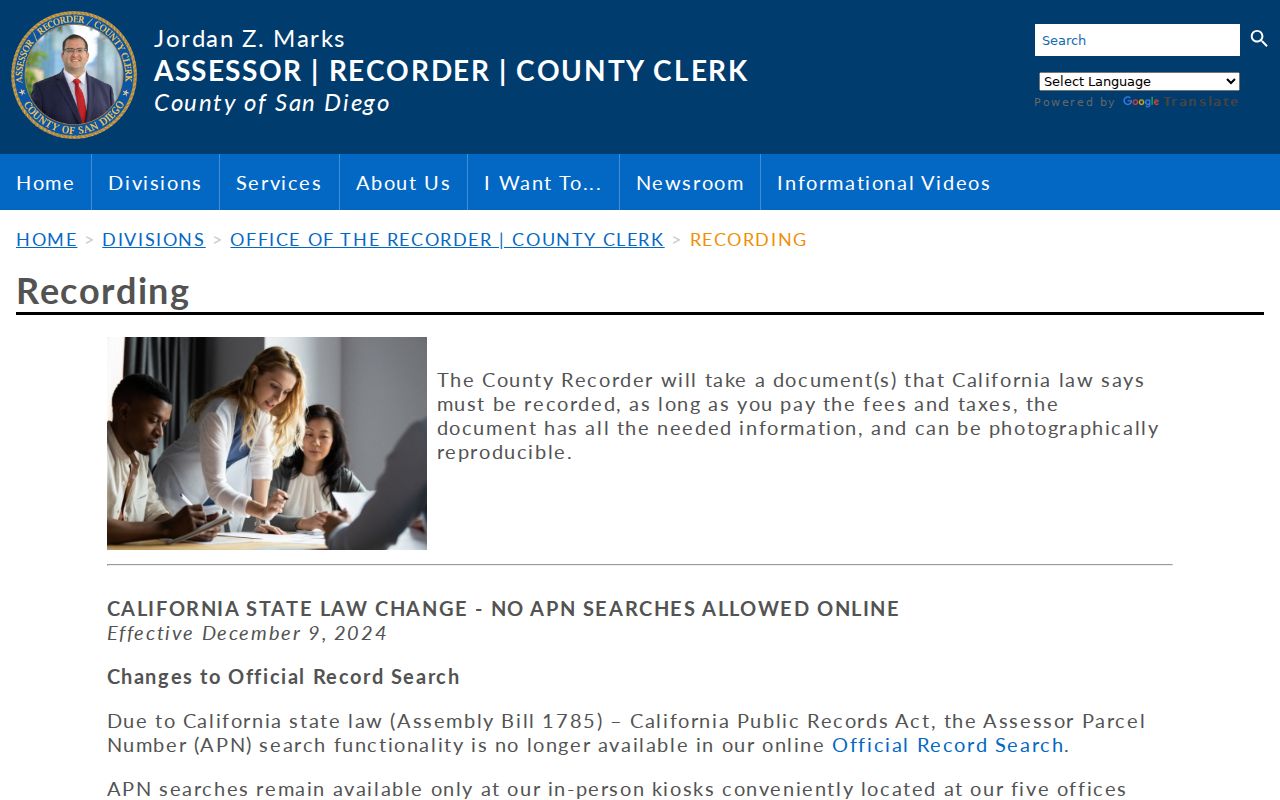
The recorder record is the ownership spine of a previous-residents search. It does not by itself identify every person who lived at the address, which is why the deed chain must be paired with household sources.
Use National City Historical Records
When a deed chain predates the online index, change channels instead of assuming the record is missing. San Diego County Archives holds official records from 1848 to 1959, with a bulk of the collection from 1873 to 1931, plus maps from 1854 forward. Earlier books and indexes can be reached through archive finding aids, staff help, and public kiosks. The nearby Chula Vista ARCC branch at 590 Third Avenue is a counter option for current recorder assistance, while the County Archives is at 10144 Mission Gorge Road in Santee.
For the collection description and historical access route, use the San Diego County Archives collections overview.
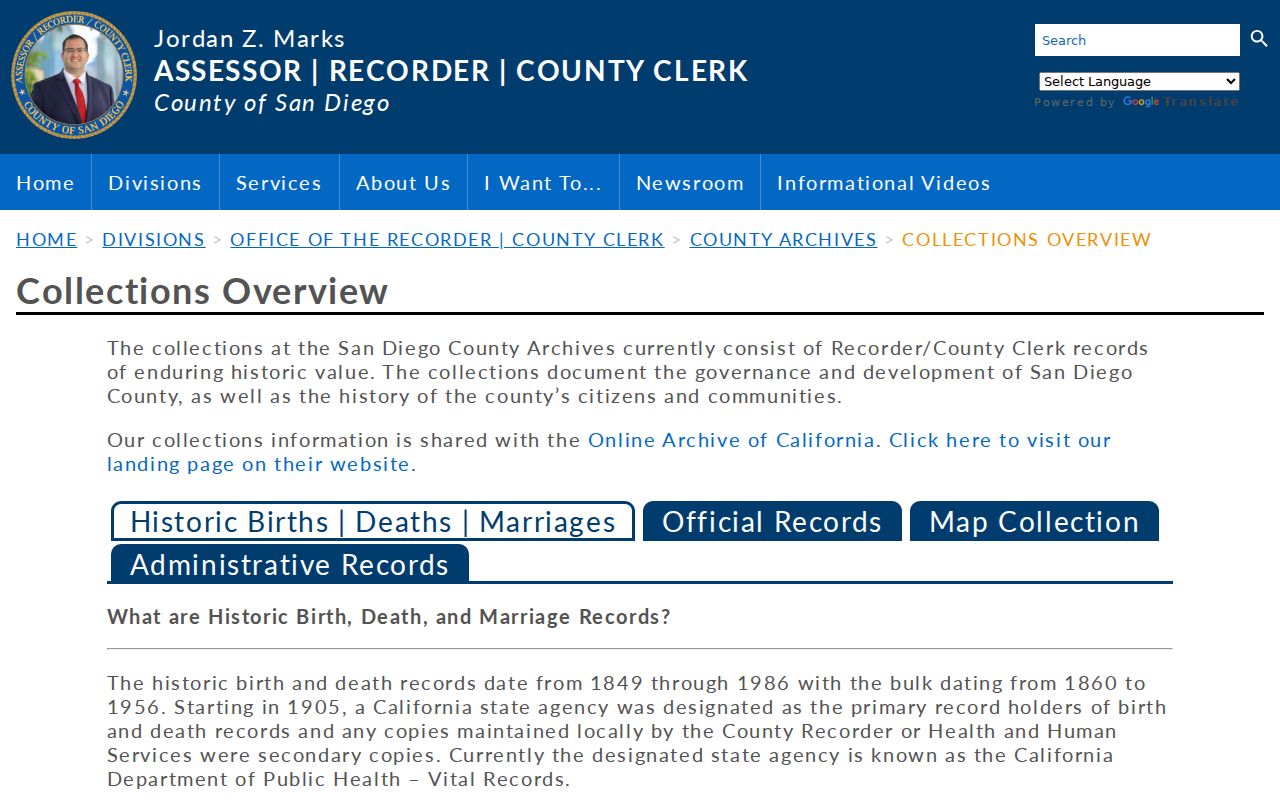
County Archives is the right turn for older official books, while the Kile Morgan room supplies a local complement: National City deeds and mortgages from 1871 to 1940. The two collections are not substitutes. The county record controls the official instrument, and the local collection can add a city-specific clue or a readable context item.
Recorder and County Clerk help is 619-237-0502, and archives@sdcounty.ca.gov is the archive contact. A mailed copy request should include the document number, recorded year, at least one party, and document type. Send it to San Diego Recorder/County Clerk, ATTN Real Estate Records, PO Box 121750, San Diego, CA 92112-1750, with payment by check or money order. The stated general mail turnaround is 7 to 10 business days. The published copy schedule lists $2 for the first page, $0.05 for each added page, $1 for certification, and a $2.50 card surcharge for the applicable card route.
Match National City Address Records
An old address can fail for several reasons. A directory may use a cross-street phrase. A deed may name a lot and block. A map may show a street line that is hard to align with a modern parcel. SanGIS geometry, a plat reference, and the legal description can test whether the land stayed the same while its address wording changed. Record the original wording before normalizing it.
Research has not located a verified National City street-renumbering chronology. No year should be assigned to a supposed renumbering project, and no older address should be silently converted into a modern one. Compare the source wording with a dated Sanborn sheet, map, newspaper, or deed. If the evidence does not join, mark the break as unresolved. An explicit gap is safer than a false chain of previous residents.
Keep a small address ledger with the date, exact wording, source type, cross-street or lot reference, APN, and legal description. Search variants only after that ledger is saved. This approach also helps when an old directory entry uses a householder name while the deed names a trust, estate, spouse, or business.
Note: A legal description can preserve land continuity, but it cannot turn an uncertain historical address into a verified residence.
National City Directories and Census
Directories supply annual or near-annual clues between census years. Kile Morgan’s directory shelf runs from 1889 through 1984, and a verified 1957 National City Householders Directory provides an address-first view. Federal census schedules are public through 1950 under the 72-year access rule. The census can show a household at an enumeration date, while a directory can place a named person at an address in a nearby year. Neither source should be stretched to cover a year it does not contain.
The National Archives Riverside genealogy page describes the regional federal holdings used for census and related research.
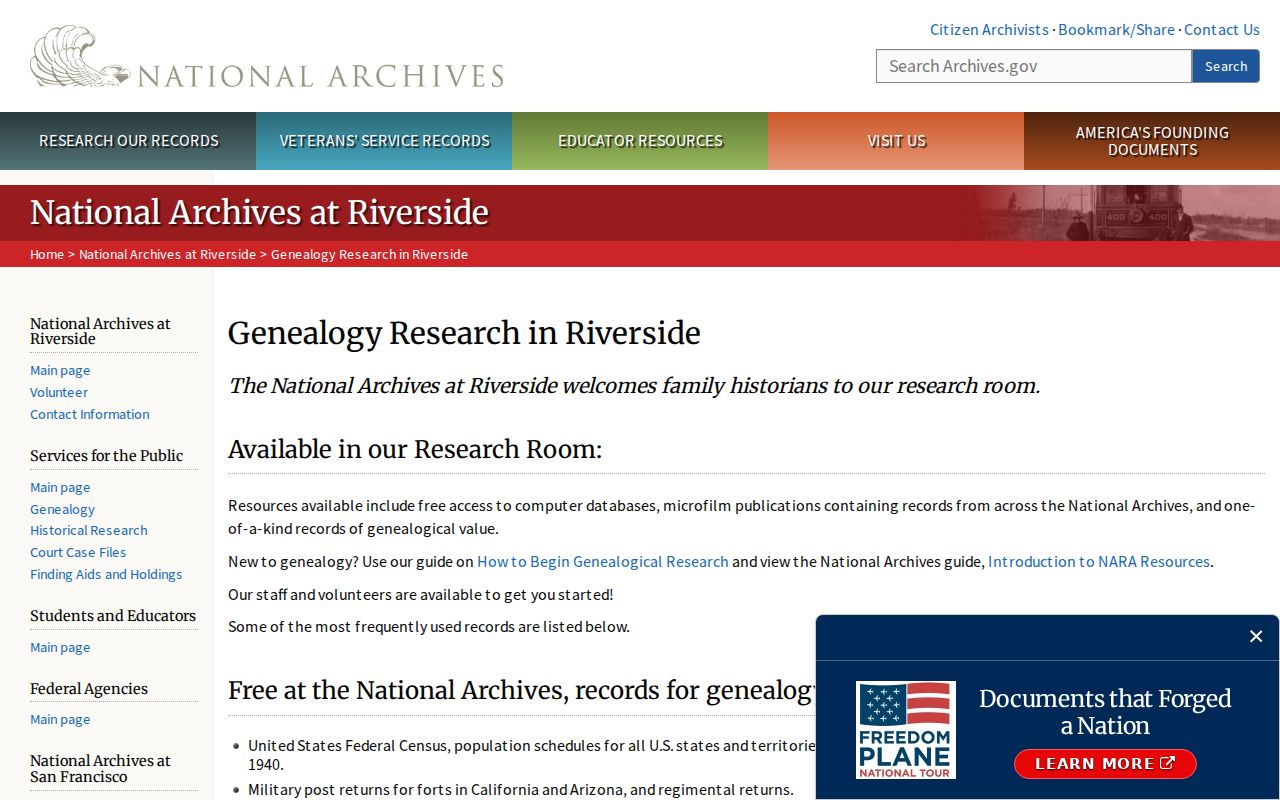
NARA Riverside is at 23123 Cajalco Road in Perris and lists appointment access Monday through Friday, 9 to 4. The Kile Morgan Memory Lab also offers free Ancestry Library Edition, a microfilm reader, and appointment-based digitization. The local-history room lists 619-470-5870 and localhistory@nationalcityca.gov. Call before travel because local-history room information uses both scheduled hours and appointment-only language.
- Begin with a known address or name in the nearest directory volume and copy the exact spelling, address, occupation, and association clues.
- Move to the 1957 householder section or another reverse section when the goal is an address-first household clue.
- Compare the closest census year, such as 1950, and record the household members and address wording shown at that enumeration.
- Bridge the ten-year census gaps with annual or regional directory volumes, newspapers, school records, and dated maps.
- Check an apparent disappearance against canvass notes, OCR, legal descriptions, and a second source before deciding that a household left.
This pairing supports family history and reunion research without pretending that a directory or census is a live occupant list. Names, initials, spouse references, and street spellings should be copied as printed before any modern interpretation is added.
Read National City Householder Records
The 1957 reverse section is a practical bridge between a property question and a household question. Start with the street or address, then test the returned name against an alphabetical directory entry, a census snapshot, a newspaper notice, or a deed dated near the same period. Earlier and later Polk runs may use different coverage, and Kile Morgan does not publish an itemized annual shelf list. The confirmed 1957 section is useful precisely because it is a documented checkpoint, not proof that every year has the same format.
OCR can mangle names and street spellings in digitized material. The page image controls the transcription. The 1892 to 1893 publisher also warned that removals and changes during canvassing could introduce errors, so absence from a single directory is weak evidence. The National City Directory Book gives the collection-level context, while a previous-residents search uses a particular entry only as one dated link in the address trail. No dedicated National City house-history guide was located, so the researcher must assemble the chain from these separate sources.
When an old address does not match, compare the reverse entry with a Sanborn sheet, lot reference, or deed legal description. A street name can be stable while the written number, cross-street phrase, or parcel relationship needs more work.
Use National City Records and Maps
Sanborn maps add the building layer that a deed and directory cannot supply. Kile Morgan holds local Sanborn material from 1887 through 1927, and the Library of Congress provides a digitized 1911 National City atlas with thirteen sheets online. A sheet can show a footprint, use, nearby streets, and an address context that helps align an old directory entry with the parcel under study.
The Library of Congress National City Sanborn atlas record is a useful checkpoint between early directory entries, later householders sections, and current parcel geometry. Read its symbols and labels as building evidence. A Sanborn sheet does not name every occupant, prove ownership, or establish that a person remained at the address after the map date.
National City’s Westside and Old Town include turn-of-the-century buildings beside later industrial uses. That local mix can make a directory identity, a building footprint, a deed transfer, and a permit record point in slightly different directions. Preserve the date and role for each source, then let the legal description and map do the alignment work.
National City Permit Records
Building and engineering files are useful when a previous-residents trail needs a dated construction or alteration clue. National City Building Division records can include Project Address, APN, Project Description, Area of Work, valuation, a code-violation question, and construction type. They also collect owner, applicant, and contractor names with contact details, license information, and business-license dates. Plans and engineering files may show an as-built, subdivision, easement, or change to the structure.
The Building Division is at 1243 National City Boulevard and lists 619-336-4210. Building@NationalCityCA.gov is the published email route. The research does not publish a complete permit starting year, so a gap before the first located application must remain a gap. A permit date describes work or a project participant. It does not prove that the owner, applicant, contractor, or any other named person lived at the property.
Compare the permit with the deed and directory dates. If a building was altered before a household appears, the permit can explain the physical setting. If a name appears only on a permit, label that person as an applicant, owner, or contractor according to the record. Role words keep a house history accurate.
Close a National City Previous Residents Trail
Obituaries and probate files can close a household trail when a former owner or householder dies. A newspaper notice may connect a name to relatives, a club, a church, or a last known address. Probate belongs with the Superior Court, not the recorder. Search the San Diego Superior Court party-name index for a probate matter, then inspect the available file or request a copy under court procedures. A filing address is a dated assertion and may be redacted, so confirm an heir or relationship with more than one source.
For a filing-monitoring option, read the San Diego County OWNER ALERT information.
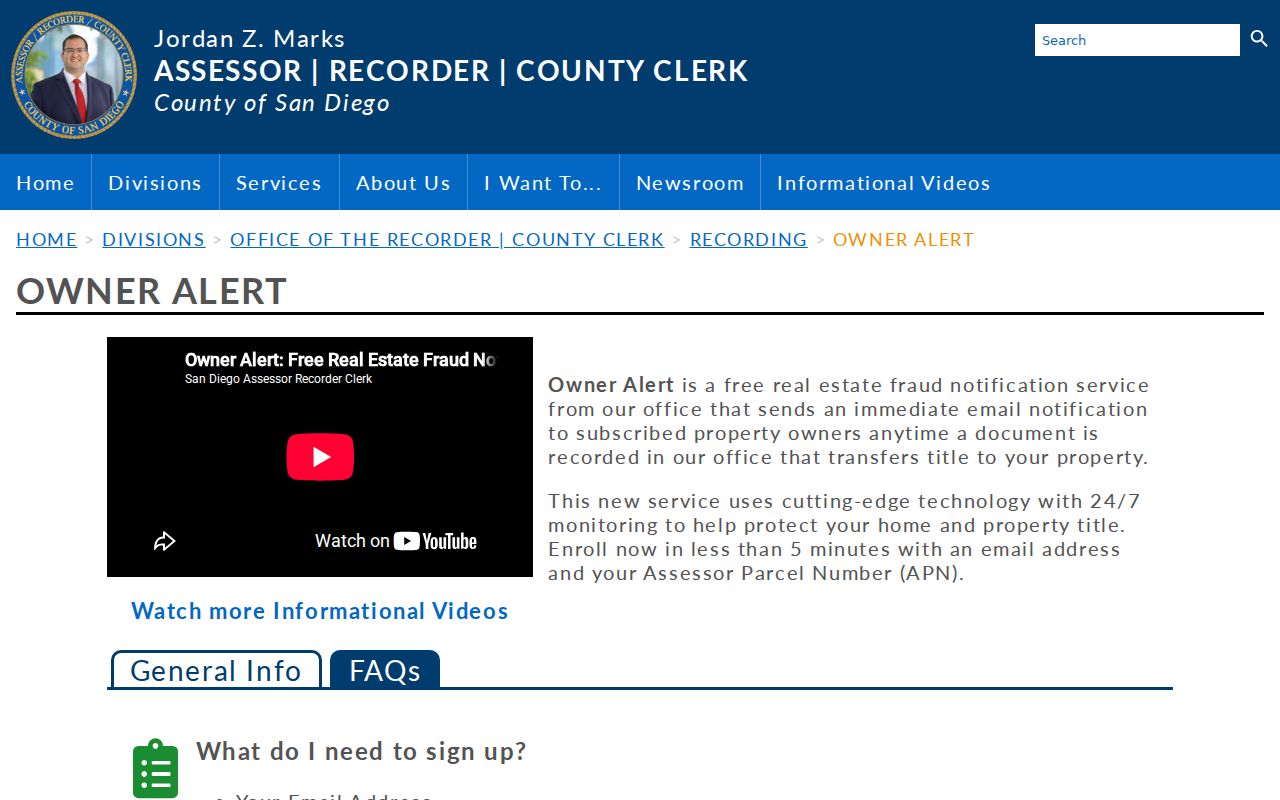
OWNER ALERT is free and can monitor up to ten names and ten APNs per email for future indexed filings. It sends notice, but it does not interpret a document, identify a householder, or serve as a resident tracker. Use the alert’s document number to return to the recorder record.
Lawful house history. Use previous-residents research for family history, preservation, genealogy, reunion work, or personal property curiosity. Do not use a living person’s name or address trail to stalk, harass, intimidate, or harm that person.
A careful finish states what the sources establish and what they do not. The deed chain can show transfer. The directory can show a dated name and address. The census can show a household snapshot. Sanborn maps can show a building. Permits can show work. Together they create a National City house history without claiming more than the records support.