
Finding National City Residents
Start with the clue you actually hold. A current parcel points toward SanGIS, the San Diego County Assessor, and the recorder's office. A case number belongs to the Superior Court party index. Family-history questions fit the Kile Morgan Local History Room. Its shelves hold newspapers, yearbooks, census schedules, and older city directories. Checking your own registration goes through California My Voter Status behind an identity gate. These are separate systems, not chapters of one shared National City residents directory.
Each record answers a narrow question. An assessor file ties an owner to a mailing address, a value, a sale, and a parcel. But it never lists occupants. A deed names the parties to an instrument, not today's household. A court index finds a case. It proves nothing about a current address. Directory entries preserve a dated householder, occupation, or business link. So read each record's role and date before treating a name as a resident clue.
- Start with the name, address, or era you can defend, then write down spelling variants.
- Use the county parcel and assessor channels to anchor an address to an APN, or assessor parcel number.
- Search the ARCC Official Records name index for the owner, seller, trust, or organization connected to the parcel.
- Use a court, vital, license, yearbook, newspaper, or directory source that fits the person and date.
- When the online route ends, use a kiosk, counter, mail request, library appointment, or California Public Records Act request.
Where National City Records Live
The record trail for National City crosses city, county, and state lines. The city holds legislation, permits, police records, and requestable municipal files. San Diego County ARCC combines assessor, recorder, and county-clerk services under one roof. The Superior Court keeps trial files. State systems cover vital records, licenses, business entities, custody information, and privacy programs. The custodian matters, because no office can certify another office's copy.
The ARCC Official Records Index reaches 1970 to the present online by name. Earlier books require an ARCC kiosk or a trip to the County Archives. Assessor ownership help comes by phone, kiosk, or ParcelQuest. California law limits Internet publication of owner names. The Chula Vista ARCC branch sits nearby at 590 Third Avenue. For a street-by-street method, the National City street directory keeps parcel geometry and address records together.
San Diego County Recorder / Register of Deeds
ARCC Official Records
Countywide service
619-237-0502
San Diego County Assessor
ARCC Property Information
ParcelQuest and kiosks
619-236-3771
California Elections Records
Self-lookup only
Identity-gated service
Personal record check
The official ARCC assessor entry shows the property-information route and its access boundary.
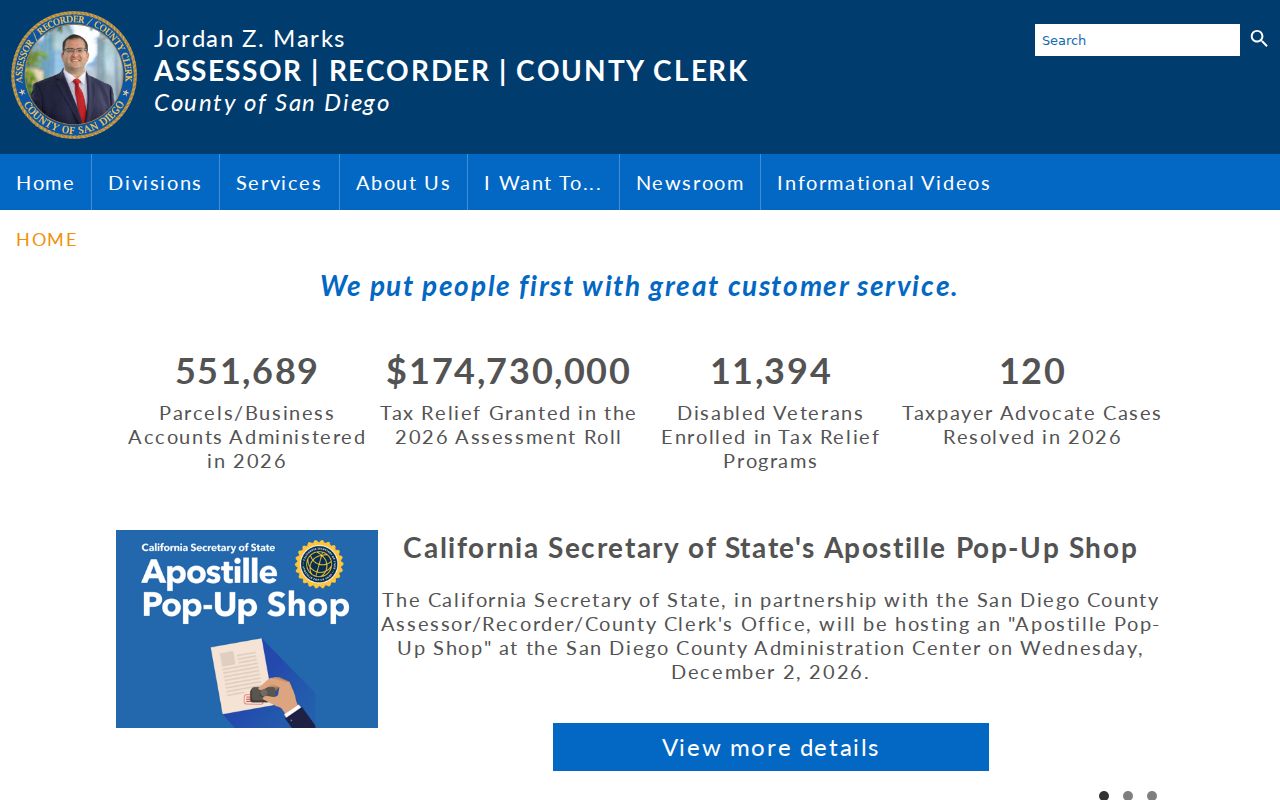
That channel links an address to a parcel and an owner record. Just remember the owner record is never a full household list.
Current National City Directory Sources
Current National City residents surface indirectly, through records built for other purposes. The property channel names an owner or parcel. The recorder names a party to an instrument. Business and professional systems reveal an entity role or license relationship. The court index flags a dated case. The Chamber lists commercial and nonprofit contacts, not households. Treat every row as a clue with a role, a date, and its own access rule.
| Source | Who It Lists | Keeper | Access |
|---|---|---|---|
| ARCC property information | Owners, parcel facts, sales, and mailing or situs clues | San Diego County Assessor | Phone, kiosk, or ParcelQuest |
| My Voter Status | A voter’s own registration and election details | California Secretary of State | Identity-gated self-check |
| ARCC Official Records | Parties to deeds, liens, easements, and releases | Recorder / County Clerk | Free name index; images and copies separate |
| City records and permits | Officials, applicants, owners, contractors, and project addresses | National City | Laserfiche, NextRequest, or division request |
| Business and license records | Entities, agents, officers, licensees, and dated affiliations | California SOS, DCA, ARCC | Official search; disclosures vary |
Let the question pick the source. A person-name search can move from court and license records toward a parcel or recorded instrument. An address search starts with geography and ownership channels. To confirm one identity, a National City resident lookup works best when it pairs stable facts instead of trusting a single index hit.
The ARCC Official Records search serves as the name-index entry point for deeds and related instruments.
The official records page shows the split that matters here. A free index result is not the same as the document image or certified copy the recorder holds.
National City Court and Vital Records
The San Diego Superior Court party index returns a case title, number, location, and type. It also gives filed date, party names and roles, and register-of-actions events where available. It shows no charges or disposition. An entry can linger after a dismissal or a no-guilt outcome. Pre-1974 cases, juvenile matters, infractions, sealed material, and sensitive remote documents all carry limits. File requests go to the court location listed in the result. Not every National City case sits at South County.
Birth, death, and marriage copies follow a separate California system. ARCC issues local copies. CDPH holds statewide records from July 1905. California splits copies into authorized and informational versions. The authorized type requires eligibility and a sworn statement. The informational type is stamped not valid to establish identity. Confidential marriage records return only to a party. A court order from the issuing County Clerk also works. A divorce certificate or abstract is not the same as the Superior Court decree.
Genealogy, heir research, and family-link questions all draw on these records. Each request must follow its eligibility rule. A database transcription can flag a likely event. The custodian's copy controls.
The San Diego Superior Court index entry is the official starting point. Use it for a case-location check.
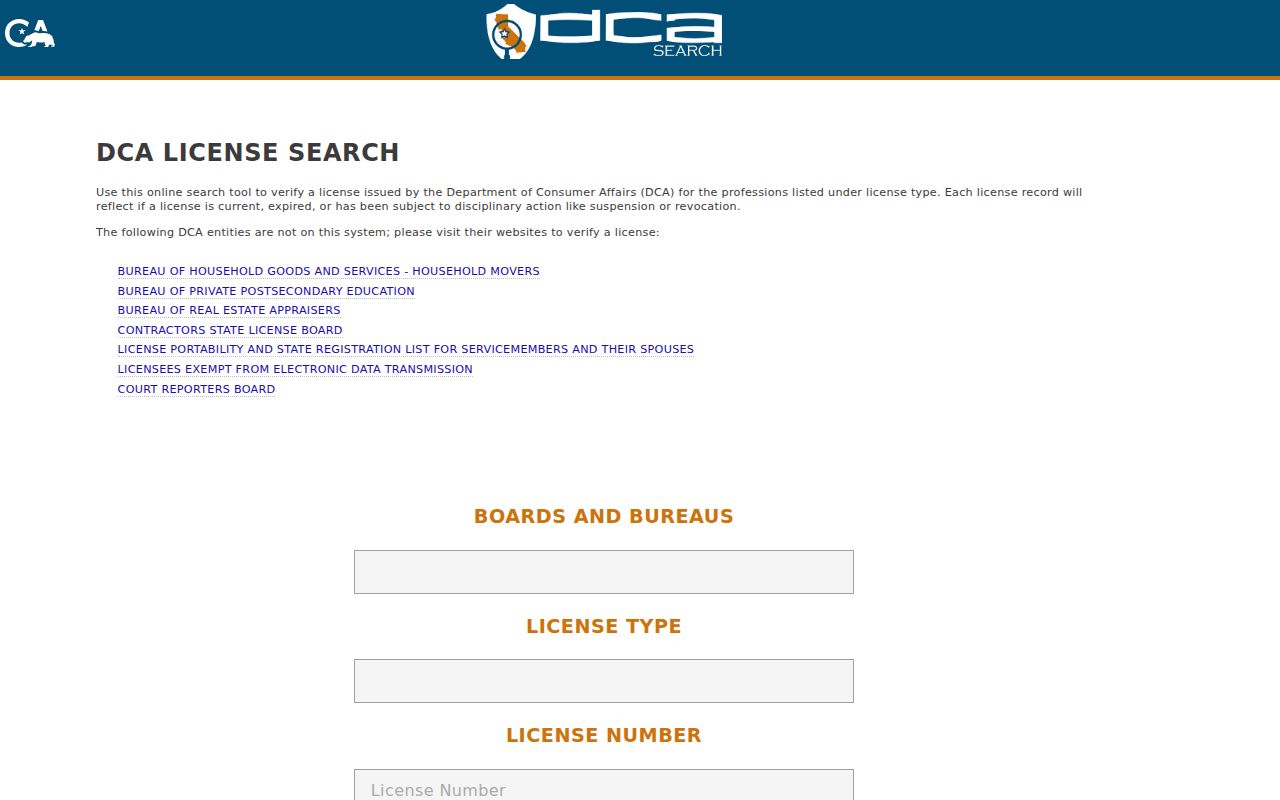
The county's official record display earns its date and source note. An index result and a certified copy serve different purposes.
California Search Fields for One Name
San Diego Superior Court handles no statewide resident lookup, yet its Party Name Search can still narrow a National City question. Start with case type and case location. Party type matters only for Civil or Domestic matters. Add the filed-year range, last or business name, first name, and date of birth to separate a common name from the crowd. Results come back as a locator, not a file. Save the case number and location before requesting the actual documents.
| Court search field | Format and use |
|---|---|
| Case Type | Required dropdown that limits the category. |
| Case Location | Required court location or division. |
| Party Type | Conditional field for Civil or Domestic searches. |
| Filed year range | Optional four-digit beginning and ending years. |
| Last or business name | Main name key; more characters improve speed. |
| First name and date of birth | Optional narrowing fields where applicable. |
The Superior Court party search costs nothing. Getting the official file itself is a separate step.
National City Records: Index or Copy
Search tools and official copies serve different purposes. A name index is quick and usually free. Pulling a kiosk image, court file, vital copy, or recorder-certified page takes more effort, and fees may apply. Commercial compilations sweep up public and marketing data alike, but they can blur people who share a name, and their data often lags behind the custodian. Skip the brand comparisons. Judge a records source by its origin, its date, the person's role, and whether the issuing office stands behind the entry.
| Route | Strength | Limit |
|---|---|---|
| Official index | Fast locator with a custodian and record reference | May omit images, disposition, or protected fields |
| Official file or copy | Primary document, image, or certified record | Eligibility, fee, ID, mail, or counter rules can apply |
| Commercial compilation | May suggest a spelling or old lead | Stale, conflated, paid, and not an official record |
National City School and Community Trails
National City's yearbook runs are a gift for anyone tracing classmates. National City High spans 1910-20, Sweetwater Union picks up in 1921, National City Junior covers 1954-91, and National City Middle starts in 1992, with partial Granger, San Diego Academy, and San Miguel volumes. A yearbook can supply a name variant, an activity, a photo, or a class year. Those details make an official match far less fragile.
The National City Chamber publishes current Chamber and Auto directories naming businesses, nonprofits, and contacts. Treat them as affiliation records, not resident lists. Kile Morgan holds historic Chamber and member directories, while the Memory Lab offers free Ancestry Library Edition, a microfilm reader, and appointment-based digitization for family papers, photos, film, audio, and obsolete media. Bring storage for any transfer. Some media will need real-time playback.
A community source earns its keep when it answers a dated question: who joined a club, attended a school, signed a paper, or showed up at a local event. It should never be stretched into a household register.
The California Secretary of State business search is the official route to an entity name, file number, status, and dated filing lead.
Personal material may never reach a public index. The National City Memory Lab offers a preservation path for it.
National City’s Record-Keeping Story
National City's paper trail runs older than its city government. Kimball papers start in 1854, maps in 1868, and local deeds and mortgages in 1871. The California Patron arrives in 1876. The National City Record follows in 1882, and municipal minutes, ordinances, and Sanborn material come in 1887. Directories begin in 1889. They gain a dedicated National City section in 1892-93. That timeline is layered. Historical searches work best as stacked records rather than a single database query.
| Era | Useful National City trail | What it adds |
|---|---|---|
| 1854-1870s | Kimball papers, maps, deeds and mortgages | Founders, land context, early property links |
| 1880s-1920s | Newspapers, municipal files, Sanborn, directories, census | Names, addresses, buildings, events, households |
| 1930s-1960s | Polk runs, householder sections, yearbooks, newspapers | Address-to-name clues and school connections |
| 1970-present | ARCC web index, city files, current parcel and court channels | Recent instruments, projects, cases, and official leads |
The newspaper line shows rare continuity. The Record ran 1882-1902, the News 1903-55, the Star-News 1956-95, and the Star News continues from 1996. Check OCR results against the scans, because title changes, spelling quirks, and cross-border South Bay coverage can quietly skew a search.
National City’s Kile Morgan Record Shelf
The Kile Morgan Local History Room connects the modern lookup problem to a physical shelf. Its holdings include San Diego County and City Directories from 1889-1984, deeds and mortgages from 1871-1940, maps from 1868-2000, Sanborn maps from 1887-1927, and newspapers from 1882 forward. Add roughly 4,500 photographs, oral histories, club scrapbooks, and school yearbooks. The room's posted hours and appointment language conflict, so call 619-470-5870 or email localhistory@nationalcityca.gov before traveling.
Budget cuts closed the room in 2010, and volunteer support brought it back on June 2, 2014. A cited FY2020-21 report counted more than 800 digitized objects, among them over 700 photographs, 81 yearbooks, and 59 Kimball diaries. The 2025/26 library strategy describes a collection assessment with SDSU and California Revealed, plus future Online Archive of California integration and expanded local-history access. Those initiatives can shift what is available, so a quick staff check is worthwhile.
The Kile Morgan local-history collection page is the source for holdings and current access instructions.
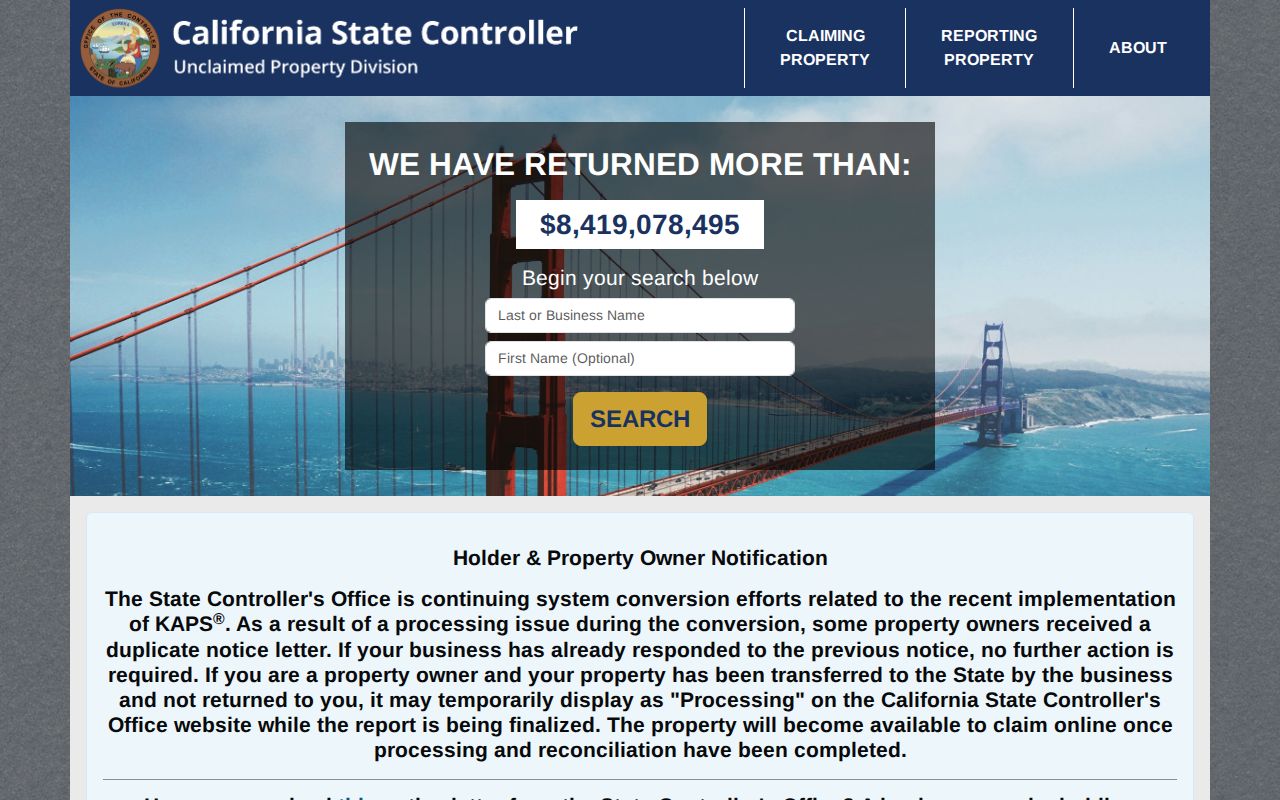
Before visiting the shelf, confirm access details through the Kile Morgan holdings page.
Definitions for National City Searches
Records speak in short terms that hide real limits. One address can surface in a parcel map, deed, directory, court filing, or permit, yet each record describes a different relationship.
- Resident roll
- A record set with people connected to a place or public function. It is not automatically a complete household list.
- Index
- A finding aid with names and record references. An index is not the full image or certified copy.
- Criss-cross directory
- An address-first directory section that turns a street or house number into a householder clue.
- Parcel
- A mapped piece of land identified by an APN. Parcel boundaries do not prove who occupies the land.
National City Records Beyond the Web
Web portals are just one lane in the National City records network. The city's public-records page gathers NCRecords and Laserfiche holdings. Its reach runs from ordinances and resolutions to minutes, council packets, agreements, board files, and some historical material. NextRequest handles the rest. It takes electronic requests, tracks status, and delivers copies by download. Name the department and the record type. Add an address or APN, a date range, and the format you want.
The Public Records Act tilts toward disclosure. An exemption is the only thing that closes a record. Agencies normally answer within ten calendar days, with a fourteen-day extension allowed for unusual circumstances. Nothing obliges the city to build a fresh list from scattered databases, though. Building and Engineering requests work best when they target an existing file. Think permit, plan, subdivision, easement, or as-built. Police records carry a role-specific form and legal release limits. ARCC, the court, the library, and the archives each run their own channel. Choose a counter, mail, or appointment route for each.
A narrow request beats a broad demand. Asking for everyone tied to an address rarely works. No custodian keeps such a roster. A precise request also respects a basic line. It asks for a record that exists, not a list that would have to be invented.
National City Privacy Boundaries
California law does not put every personal fact within reach of a National City resident lookup. Safe at Home gives eligible participants a substitute address and confidential voter registration. The Consumer Privacy Act arms consumers against covered data businesses. Government-record facts sit outside much of that. The federal Driver's Privacy Protection Act guards motor-vehicle data. Sealed, juvenile, adoption, confidential vital, and protected court records carry their own limits.
What is public still needs lawful personal use. A parcel owner may not live there. A tax mailing line is not a household roster. Voter data is purpose-restricted, and the official state form covers a voter's own status. Private household members, utility customers, and protected participants may never surface in any public source at all.
The California voter status service shows the identity gate that guards any personal registration search.
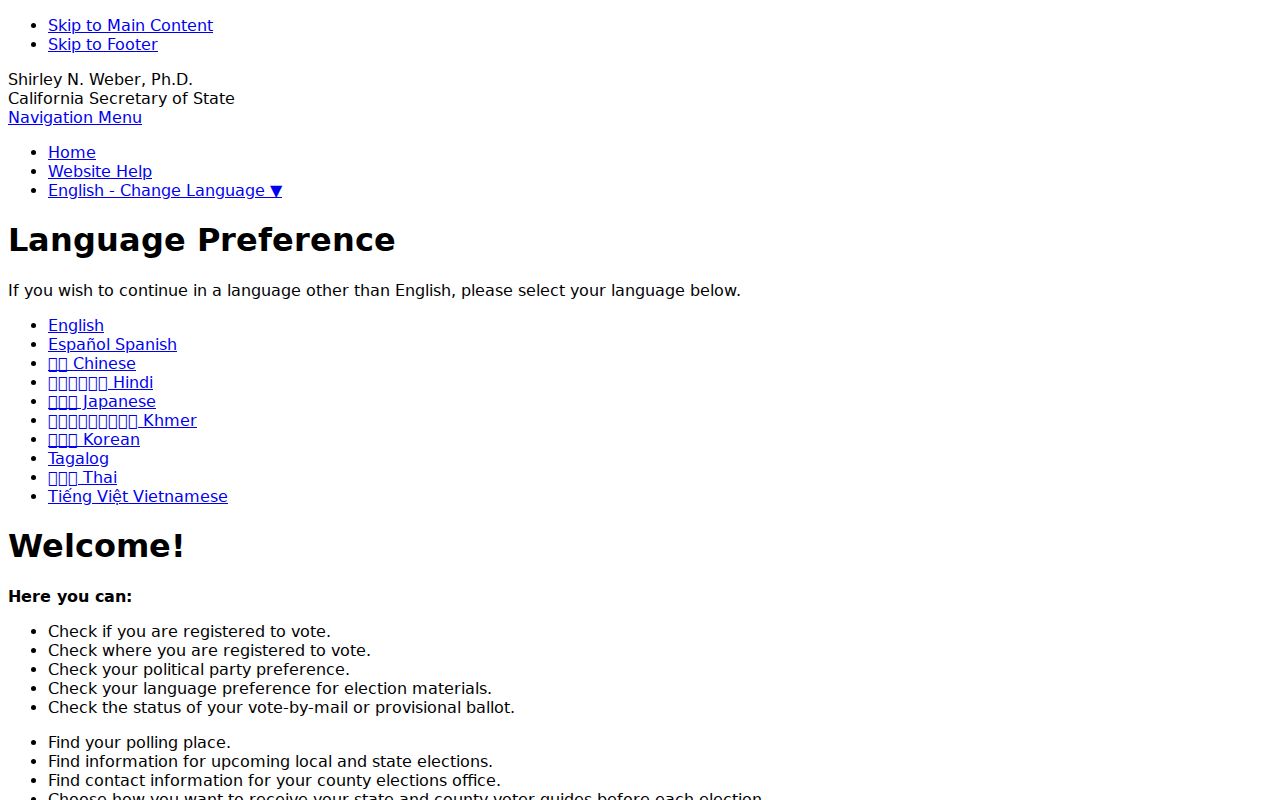
It checks your own status only, not a way to browse a National City street or block.
Historical National City Resident Directories
The Kile Morgan shelf spans San Diego County and city directories from 1889 through 1984. Its 1892-93 National City section, compiled by S.H. Olmsted and A.A. Bynon, lists names, occupations, business ties, and residences phrased as near, between, or corner descriptions. Later R.L. Polk suburban volumes pair alphabetical listings with householder sections. The 1957 edition stands out as an address-first National City Householders Directory. One canvass with a gap proves little on its own.
Treat each directory entry as a dated clue. Check it against a census snapshot or a newspaper notice. A Sanborn footprint, a deed, or a permit works too. OCR mangles names and street spellings often, so trust the scan over the text. The full collection map and a sample entry sit on the National City city directory page. The tracing method is there as well.